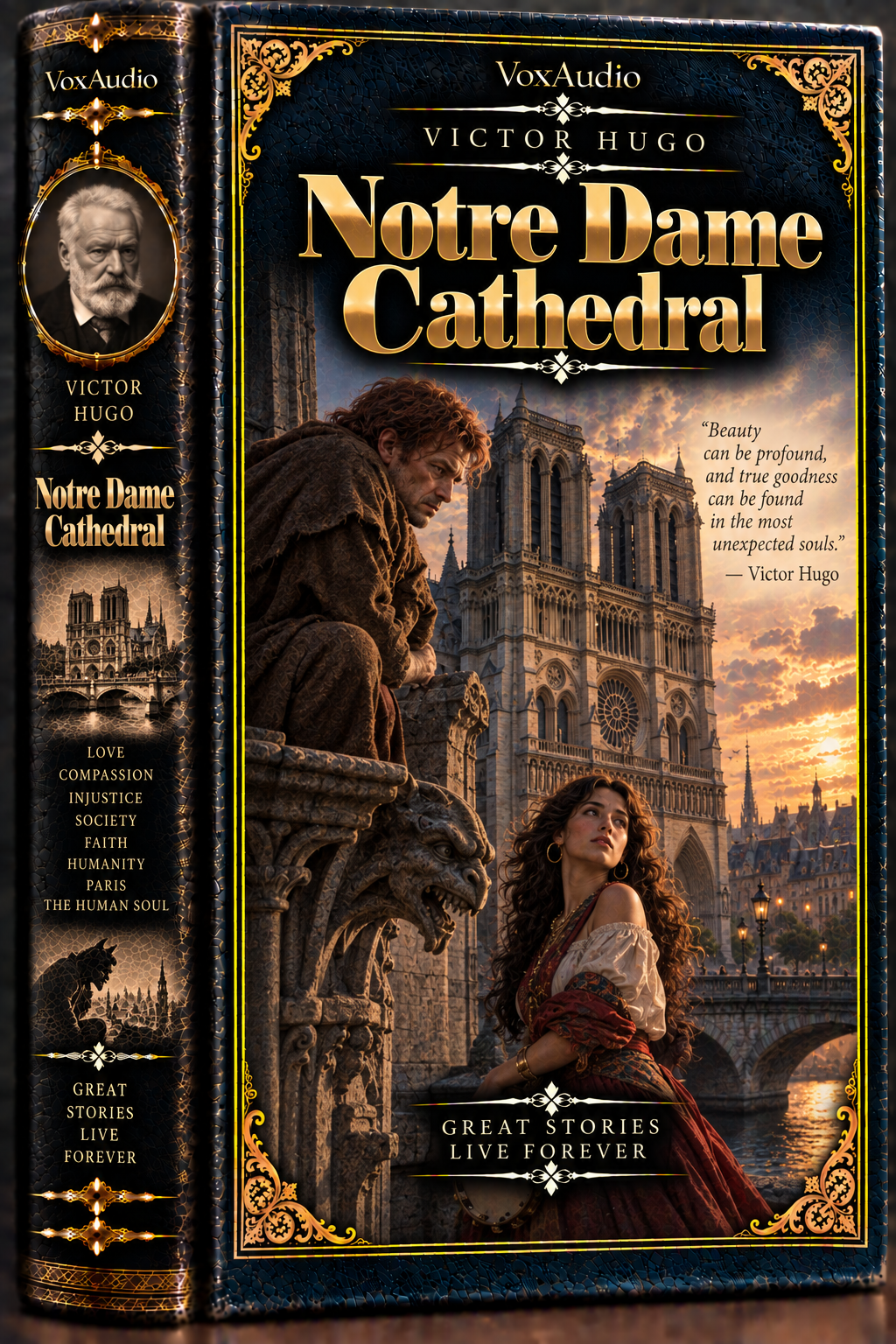
About this audiobook
In medieval Paris, the lives of Esmeralda, the bell-ringer Quasimodo and the priest Claude Frollo become entangled around Notre-Dame Cathedral. Attraction, prejudice and unequal power shape encounters in which a person's public image can bear little relation to inner experience. The city's streets and institutions give private choices consequences far beyond a single relationship.
Victor Hugo makes architecture an active presence within the novel's historical world. The cathedral connects different social spaces, while crowds and authorities interpret events through their own fears and interests. Compassion can be difficult to distinguish from possession when people assume the right to determine another person's future.
The novel explores exclusion, desire and the vulnerability of those who lack protection. Its dramatic action belongs to a richly imagined city where beauty and cruelty coexist, inviting readers to consider how appearances influence judgement and how the need for understanding survives within systems that can turn difference into an accusation.